Rain & Water
intermediate conceptsGlobal Snow & Rain 3 · Core Concepts
Overview
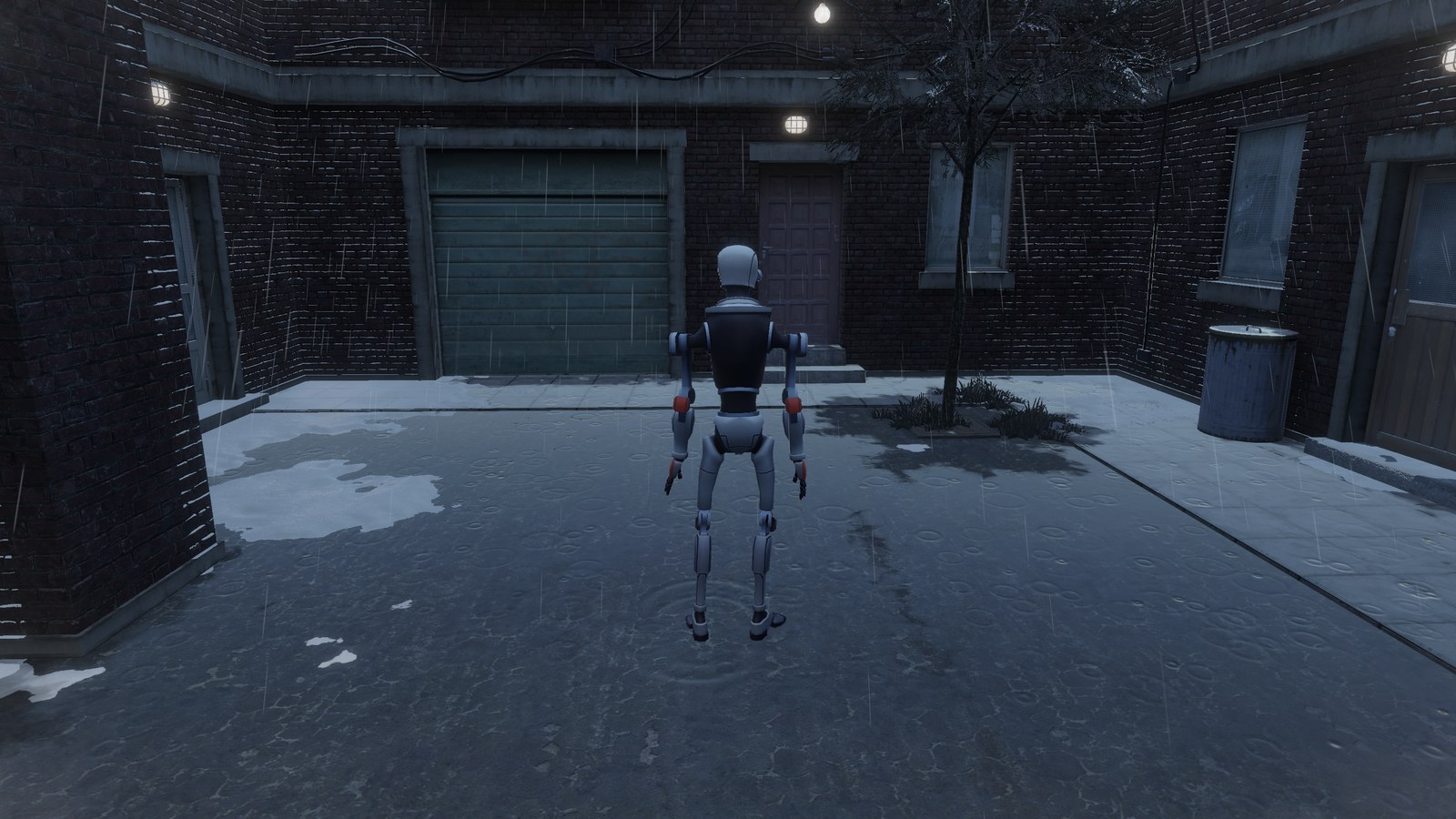
Global Snow can rain as well as snow, in the same scene and at the same time. Two sliders in the Weather block drive the water:
- Rain sets how much it is raining: the falling rain plus the wetness of the surfaces it reaches.
- Puddles sets how much standing water the scene has. It works on its own, so you can have puddles after the rain has stopped.
The options are in the Rain & Wetness foldout. See Parameters for the full list.
Rain
Move the Rain slider above 0 to start the rain. The rain falls around the camera and is pushed by the shared wind (Wind in the Snowfall, Dust & Wind foldout). With Rain above 0, the Rain & Wetness foldout shows three extra options:
- Speed and Streak Length change how fast the rain falls and how long the streaks look.
- Contrast sets how visible the falling drops are, without changing the amount of rain. At 1 the streaks stay visible on a bright sky or on snow. At 0 the drops only bend the view behind them, like small lenses.
Camera Rain, in Rain & Wetness below Puddles and in the Weather block, puts drops on the camera lens while it rains, with Drop Size and Distortion. More drops land when the camera faces the rain or moves into it, and few with its back to the rain. The drops grow in the rain and, once they are heavy enough, run down with the slant of the rain without stopping until they leave the lens, joining other drops and leaving wet trails that dry. When the camera turns or the wind changes, the drops and trails already on the lens stay where they are and only the running drops change their way. Under a roof no new drops land and the ones on the lens dry out. It shows only on the camera with Global Snow.
Wetness
Rain wets the surfaces it reaches. Bare ground gets darker and shinier. Snow exposed to the sky gets the wet look too, up to the Rain amount. Snow Wetness is the minimum wetness of the snow, applied everywhere, also under cover. Use it for melting snow without rain.
In Play mode, surfaces stay wet for a while after the rain stops, and then they dry.
Wall Wetness
Walls and other steep surfaces get wet where the rain reaches them. Wall Wetness adds a wetness of its own, rain or not, from 0 (default) to 1: use it for walls that stay damp. It adds some work to the snow pass, so leave it at 0 when you do not need it.
Rain does not always fall straight down, so under small roofs it still reaches part of the walls. The wind pushes the rain under the roof onto the walls that face it, up to 1.5 m in. Walls deeper under cover, or on the side away from the wind, get less water.
Puddles
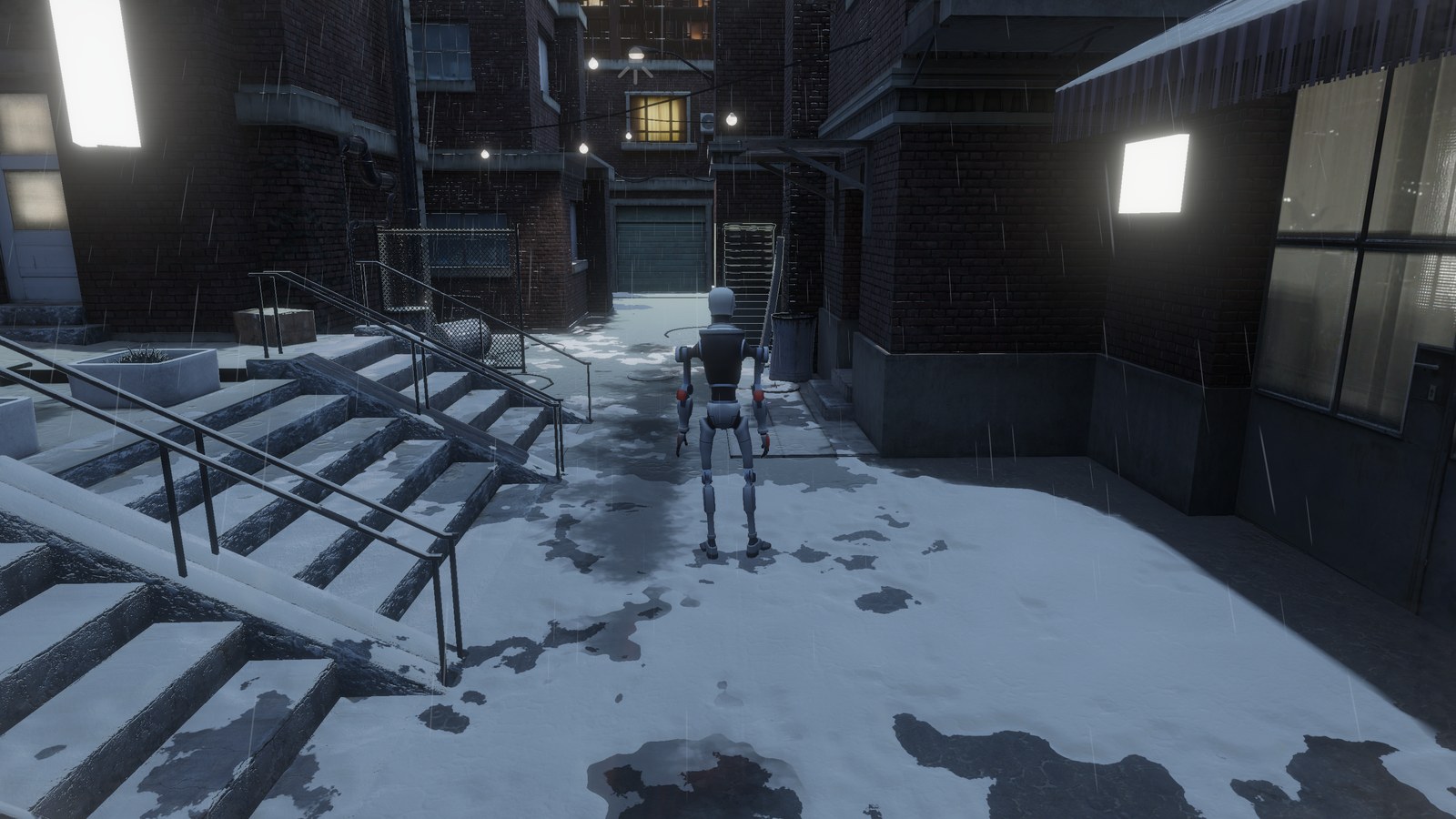
Move the Puddles slider to add standing water. It starts at 0. Puddles form:
- On level surfaces only. Slopes and walls do not hold water.
- Where the rain can reach. The ground under roofs stays free of puddles.
- On bare ground, and on the dirt that marks reveal in the snow. Where snow covers the ground, the water shows in the bare patches (see Scatter in Snow Appearance).
At the top of the slider, the puddles join and cover all the level ground they can reach.
Choosing Where Puddles Form
Without a mask, Global Snow places puddles with a procedural pattern. Puddles Scale sets its size: higher values give smaller, more isolated puddles.
For full control, assign a Puddle Mask. Global Snow reads its red channel and maps it on the world: white areas get puddles first, black areas never get puddles. Set Mask World Size (meters covered by the mask) and Mask World Center (X and Z position of its center). Outside the mask the ground stays dry.
The Coverage Mask of the Coverage foldout also applies to the water: where it removes the snow, it also removes the rain wetness and the puddles.
Ripples
Ripples move the water of the puddles. They only show on puddles, so they need Puddles above 0 and some puddle water where the ripple happens.
| Option | Description |
|---|---|
| Contact Ripples | Ripples left by footprints, marks and impacts. They come from objects with Global Snow Interaction, first person footprints, objects added with AddContactSource(), and the MarkAt(), MarkTrail(), EmitImpactFX(), FootprintAt() and FootPlantAt() methods. They work in Play mode, in view of the camera and within 30 m. Range 0 to 2, 0 turns them off. Default 1. |
| Rain Ripples | Rings left by the rain drops on the puddles. They need Rain above 0. Range 0 to 2, 0 turns them off. Default 1. |
Running Drops
Running Drops are beads that appear on wet surfaces, run down under gravity, merge and leave trails. They show near the camera only, on the Game and Scene View cameras. They need Rain above 0 and they are the heaviest part of the rain.
| Option | Description |
|---|---|
| Wall Drops | How many running drops appear on walls and other steep surfaces, compared with flat ground. Higher values give more drops on walls. Default 0.35. |
| Half Resolution | Draws the running drops at half resolution. About half the cost, with softer drops. The Medium preset turns it on. |
| Contrast | How much the running drops stand out. At 1 they also darken bright surfaces such as snow. At 0 they only show reflections and sun glints. Default 1. |
To see where the drops can appear, set Rain Debug View to Running Drops Receiver in the Tools & Debug foldout.
Frost and Rain
Frost covers the ground and the lower part of walls with hoarfrost ice, up to Wall Height. It stays off the faces sheltered from the sky, Wall Height counts from the ground in front of each face, and it lies under the snow, the dirt and the marks.
Rain melts the frost. The higher the Frost value, the less the rain melts it, so a strong frost survives a light rain.
Scripting
Every option above has a property in the GlobalSnow class, for example rainAmount, puddleAmount, rainWallWetness and rainDetail. Three methods help with special cases:
GetSnowAndWaterAtPositionAsync()returns the snow and the standing water at a world position, 0 to 1 each.ResetRainDrops()clears the running drop history. Call it after a camera cut or any jump of the camera.ShiftRainFieldOrigin(Vector3 worldDelta)keeps the rain anchored to the world when you use a floating origin. Pass the same offset you applied to the scene.
See Scripting Support for the full API.
Next Steps
- Parameters - every Rain & Wetness option.
- Performance Tips - keep the rain light.
- FAQ - common questions about rain and puddles.
Suggest an improvement
Help us improve this documentation page.