Understanding Tonemapping
Tonemapping converts high dynamic range (HDR) color values to low dynamic range (LDR) for display. In Unity, this transforms 16-bit floating point colors exceeding the standard 0-1 range into traditional 8-bit values. The goal is to produce a believable, photo-realistic output image that accurately represents the light and color variations seen in real life.
Tonemapping works alongside HDR-enabled cameras and effects like Bloom. Proper application sequence preserves luminance ranges for dynamic, realistic imagery.
Tonemap Operators in Beautify 3
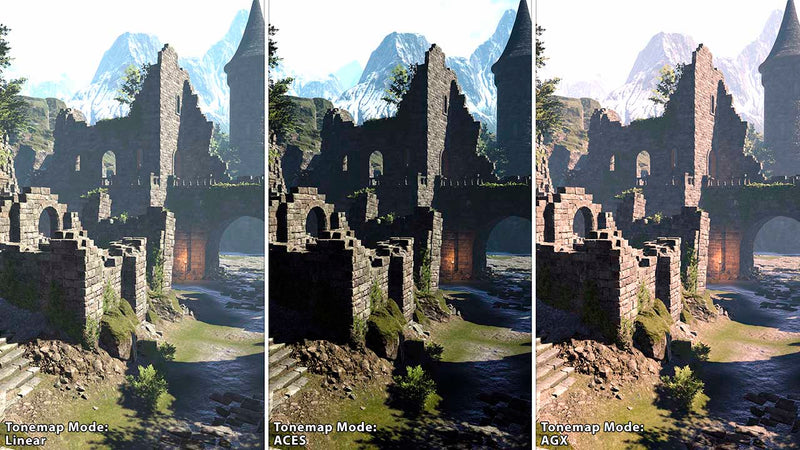
Linear Tonemapper — The Linear approach applies straightforward HDR-to-LDR conversion. It prioritizes speed and performance but may sacrifice the sophisticated visual qualities of advanced methods.
ACES Tonemapper — ACES (Academy Color Encoding System) is industry-standard, favored in film production. It delivers superior color reproduction and dynamic range management, producing cinematic results with preserved highlight and shadow detail.
AGX Tonemapper — The new AGX operator, based on Troy Sobotka's work and MIT-licensed, produces more natural colors with a balance between mid-tones and light/dark tones. It generates less saturated colors compared to ACES.
Enhancing Projects with AGX
AGX empowers developers to strengthen visual storytelling and realism across diverse environments — urban landscapes or natural settings — while maintaining lighting and shadow detail that enhances immersion.
Integration is straightforward: add Beautify 3 following pipeline guides, then select AGX from the Tonemap option.